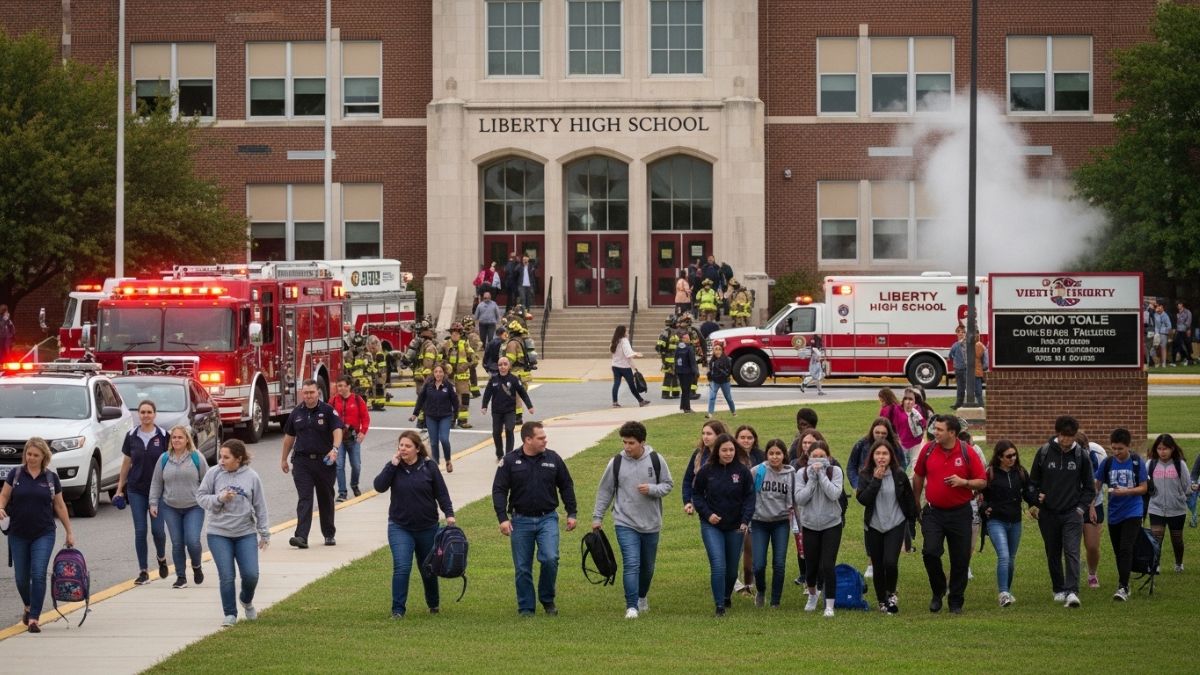
Introduction to the Liberty High School Gas Evacuation
Schools stand as places where young people learn and grow. Sometimes, unexpected events occur that test safety plans. The liberty high school gas evacuation serves as an example of such a situation. This event took place when a gas line issue arose near the campus, leading to a quick exit from the building. Officials acted fast to protect everyone inside.
The incident happened on a typical school day. Construction work nearby caused the problem. Workers hit a propane line by accident during a solar energy setup. The line sat about 45 feet from the school. Firefighters got called right away. They suggested clearing the area to avoid risks. Around 630 students and staff left the premises in an orderly way. No one got hurt, which showed the plans worked well.
People often wonder about these kinds of alerts. Gas issues can spread fast if not handled right. In this case, the smell or detection prompted action. Schools train for this to keep calm and organized. The story highlights how preparation pays off in real life.
What Caused the Liberty High School Gas Evacuation
The main reason behind the liberty high school gas evacuation came from a damaged propane line. A team installing solar panels struck the line without meaning to. This occurred close to the school grounds. Propane gas carries risks because it can ignite or spread.
Detection happened soon after the rupture. Someone noticed the issue and alerted authorities. Propane gets a special odor added so people can smell it easily. That helped in spotting the problem fast. Emergency teams arrived and checked the site. They decided on evacuation as a safe step, even though the line was not right on campus.
Construction projects sometimes bring surprises like this. Lines underground can get hit by tools or machines. In this event, the work aimed at green energy but led to this hiccup. Officials later fixed the line by the end of the day. Classes went back to normal soon after.
This type of event reminds us about careful planning in building work near schools. Checks before digging can prevent such problems. The incident did not stem from school equipment but from outside activity.
How the Liberty High School Gas Evacuation Unfolded
The liberty high school gas evacuation started around mid-morning. Alarms sounded, and staff guided students out. Those with cars left first to ease the process. Others moved to the football field as a safe spot.
From there, groups shifted to a nearby middle school cafeteria. Lunch got served to keep things normal. Parents received messages to pick up kids early. This kept everyone informed and reduced worry.
Fire crews secured the area. They used tools to find any gas spread. Repairs began once the site was safe. The whole process took a few hours. By afternoon, the fix was done, and checks confirmed no danger lingered.
Students stayed calm overall. Teachers counted heads to make sure all were present. This step proves key in any exit plan. The smooth flow came from past drills that practiced these moves.
Emergency Response During the Liberty High School Gas Evacuation
First responders played a big role in the liberty high school gas evacuation. Firefighters came quickly after the call. They assessed the ruptured line and advised on clearing the building. Their knowledge helped decide the best actions.
School leaders followed set rules. They used announcements to direct people. Staff helped with groups, especially younger students. Communication tools sent updates to families right away.
Local services worked together. Gas company teams arrived to repair the line. They shut off the flow to stop more leaks. Inspections covered the whole area to rule out other issues.
No medical needs arose, but plans included that option. Ambulances stood ready if required. This full approach ensured safety at every level. The teamwork between school and city groups made the difference.
Afterward, reviews looked at what went right. Small changes got suggested for next time. This constant improvement keeps systems strong.
Impact on Students and Staff from the Liberty High School Gas Evacuation
The liberty high school gas evacuation affected daily routines. Classes stopped for the day, shifting focus to safety. Students felt some stress from the sudden change. Staff managed to keep order amid the shift.
No physical harm occurred, which brought relief. Mental effects varied. Some kids worried about gas dangers. Counselors offered talks to ease fears. This support helped process the event.Families dealt with early pickups. Messages kept them in the loop. Community response showed care, with locals offering help if needed.
School resumed without issues the next day. The quick fix allowed normalcy to return. This built trust in the safety setup. People saw how alerts protect lives.Overall, the event strengthened bonds. It showed resilience in facing surprises. Lessons from it guide future readiness.
Safety Protocols Highlighted by the Liberty High School Gas Evacuation
Safety rules came into sharp focus during the liberty high school gas evacuation. Drills prepare for real events like this. Students know exit paths from practice. Staff train on leading groups safely.Gas detection relies on senses and tools. Added smells make leaks noticeable. Schools check systems regularly to catch problems early.
Evacuation steps include clear signals. Alarms alert everyone at once. Designated spots keep people away from harm. Counting attendees confirms safety.
Communication stands as crucial. Updates reach parents fast through apps or calls. This reduces rumors and panic.Post-event checks improve plans. Feedback from all involved refines methods. This cycle keeps protection up to date.
Lessons Learned from the Liberty High School Gas Evacuation
The liberty high school gas evacuation taught several points. Quick action prevents bigger problems. Spotting issues early saves time and risk.Preparation through drills pays off. People move better when familiar with steps. This event proved that point clearly.
Coordination with outside help matters. Fire and gas teams bring expertise. Schools benefit from strong links to them.Maintenance around campuses needs attention. Construction near schools should include safety scans. Underground lines require maps and care.
Community support aids recovery. Open talks build confidence. Sharing what happened helps everyone understand.These insights guide better practices. They apply to other places too. Safety grows from learning each time.
Preventing Future Incidents Like the Liberty High School Gas Evacuation
Steps can reduce chances of another liberty high school gas evacuation. Regular checks on gas lines catch weak spots. Tools scan for leaks before they grow.Construction rules protect nearby areas. Permits include safety plans. Workers use maps to avoid hidden lines.Education on signs of gas issues helps. Smells, sounds, or sights signal trouble. Reporting them fast triggers response.
Tech upgrades offer alerts. Sensors detect gas automatically. They link to alarms for instant notice.Ongoing training keeps skills sharp. Schools run drills often. This builds habit in safe actions.By applying these, risks drop. Protection becomes stronger over time.
Community Reaction to the Liberty High School Gas Evacuation
People in the area responded well to the liberty high school gas evacuation. Parents praised the quick updates. They felt assured knowing kids were safe.Local groups offered spaces if needed. This showed unity in tough times.
Media covered the story fairly. Facts helped calm concerns. No hype added to worry.School meetings followed to discuss. Input from all improved trust. Changes based on suggestions strengthened bonds.Overall, the event brought people closer. It highlighted shared care for safety.
For More Information: Visit Here
Conclusion
The liberty high school gas evacuation stands as a clear case of effective safety in action. A ruptured gas line from nearby work led to a prompt exit, protecting all involved. No injuries occurred, thanks to solid plans and quick response. Students and staff returned soon after repairs.
This story offers real value in understanding emergency steps. It shows the importance of drills, communication, and teamwork. Readers gain insight into handling similar situations, building confidence in school systems. Safety remains key, and learning from this boosts readiness for any challenge.