Hey there, ever wondered why some letters stand tall at the start of sentences or names? Capitalization Games might seem like a small detail in writing, but it makes a big difference in how clear and professional text looks. In this post, I’ll walk through what capitalization games are all about. These activities turn grammar lessons into enjoyable play, perfect for kids or anyone brushing up on English skills. Expect tips on rules, examples of popular games, and ideas to try at home or online. By the end, you’ll see how these games build better writing habits without feeling like work.
What Capitalization Games Means in English
This section covers the basics of when and why to use capital letters in writing.
Capital letters show up in specific spots to help readers follow along easily. For instance, every sentence starts with one to signal a new idea. Names of people, places, and things get capitals too, like “New York” or “Sarah.” This practice comes from old printing traditions, but today it keeps writing organized. Without it, text turns into a jumble, hard to scan quickly. Teachers often start with simple rules for young learners, building up to trickier cases like titles or holidays. Games make these rules stick by repeating them in fun ways. Think of it as training wheels for proper writing – once mastered, it becomes automatic. Parents and educators find that mixing play with lessons leads to faster progress. Overall, grasping Capitalization Games early sets a strong foundation for all kinds of communication, from emails to stories.
Next, consider how capitals mark important words. In book titles, major words start with capitals, such as “The Cat in the Hat.” Days of the week and months follow suit, like “Monday” or “July,” but seasons stay lowercase unless in a title. Proper nouns stand out this way – think “Mount Everest” versus just “mountain.” Adjectives from proper nouns capitalize too, as in “French fries.” Historical events get the treatment, like “World War II.” These details prevent confusion in reading. Games often quiz players on spotting these, turning potential errors into points scored. It’s a smart approach because repetition through play reinforces memory better than rote drills. Many resources online list these rules with examples, making it easy to reference while playing.
Key Rules for Capitalization Games
Here, I break down main guidelines that Capitalization Games often focus on.
First rule: Capitalization Games the initial word in sentences. This signals where thoughts begin, aiding flow. For quotes, the first word inside quotes gets a capital if it’s a full sentence. Colons sometimes trigger this for lists or explanations. Games might present sentences missing capitals, asking players to fix them. This builds quick recognition skills. Another rule involves proper nouns – specific names like “Eiffel Tower” or “Microsoft.” Brands and trademarks follow this, ensuring respect for unique identities. Places such as countries, cities, and states capitalize, like “Canada” or “Tokyo.” Bodies of water and landforms do too, for example “Pacific Ocean” or “Rocky Mountains.” Celestial bodies aren’t left out – “Mars” or “Milky Way.” Religious terms capitalize, such as “Bible” or “Zeus.” These specifics make writing precise and respectful.
Moving on, titles of people Capitalization Games when before names, like “President Lincoln,” but not after, as in “the president said.” Academic subjects stay lowercase unless naming a course, like “math” versus “Algebra 101.” Degrees and institutions capitalize, such as “Harvard University” or “Bachelor of Arts.” Historical periods and events stand tall, like “Renaissance” or “Civil Rights Movement.” Documents too, for instance “Declaration of Independence.” Languages and nationalities capitalize, as in “Spanish” or “Australian.” Proper adjectives from these get capitals, like “Italian cuisine.” Games incorporate these by having players sort words or correct paragraphs. It’s engaging because competition adds excitement to learning. Offline versions use cards or boards for group play, while apps offer instant feedback.
Why Capitalization Games Matters in Writing
This part explains the reasons behind using capital letters correctly.
Proper Capitalization Games helps readers understand text at a glance. It highlights key elements, making sentences easier to parse. In professional settings, like resumes or reports, errors can make work seem sloppy. Kids learning early avoid bad habits later. Clear writing shows respect for the audience, whether in school papers or social media posts. Search engines and screen readers rely on it for better functionality. In creative stories, it sets the tone right from the start. Games teach this by showing immediate results – correct a sentence, win a point. This method feels rewarding, encouraging more practice. Families can bond over these activities, turning study time into family fun. Educators note improved confidence in students who play regularly. Overall, solid capitalization skills boost communication effectiveness across all areas of life.
Beyond basics, it affects how messages come across. Imagine a sign saying “park closed” versus “Park Closed” – the capital version seems more official. In poetry or ads, capitals emphasize words for impact. Legal documents demand precision to avoid misunderstandings. Games simulate real scenarios, like editing emails or headlines. Players learn to spot mistakes quickly, a skill useful in proofreading. Online platforms track progress, showing improvement over time. This data motivates continued effort. For non-native speakers, these rules clarify English quirks. Interactive play reduces frustration compared to traditional worksheets. Communities share custom games, expanding options. In short, mastering Capitalization Games through games equips people with lifelong tools for clear expression.
Benefits of Using Capitalization Games for Learning
Learn how play makes grammar stick better.
Games turn dry rules into exciting challenges, keeping attention high. Competition or rewards motivate practice without boredom. Visual and hands-on elements suit different learning styles – some prefer apps, others board games. Repetition in play reinforces rules naturally. Mistakes become learning moments, not failures, building resilience. Group games foster teamwork and discussion, deepening understanding. Progress feels tangible, like advancing levels or scoring points. This approach works for all ages, from preschoolers to adults refreshing skills. Research shows playful learning improves retention rates. Parents appreciate easy setup for home use. Teachers integrate them into lessons for variety. Overall, games make education enjoyable, leading to better outcomes.
Furthermore, they adapt to individual needs. Customize difficulty for beginners or advanced learners. Track errors to focus on weak areas. Multiplayer options encourage peer teaching. Digital versions offer unlimited plays without materials. Physical games build fine motor skills too. Creativity shines in designing personal variants. These activities reduce screen time if offline. They connect grammar to real life, like writing letters or signs. Enthusiasm from games spills over to other subjects. In classrooms, they break up routine, re-energizing students. Homeschoolers find them flexible for schedules. Essentially, incorporating games transforms how people approach language skills.
Popular Online Capitalization Games
Discover web-based options for quick practice.
One favorite is Fun Factory from ABCya. Players fix punctuation and capitals in sentences to build toys. It’s aimed at grades 1-3, with levels increasing in challenge. Educational perks include immediate feedback and skill-building in a factory theme. Kids enjoy the game-like feel while learning. Turtle Diary offers several, like Capitalize First Word, where users correct sentence starts. Others cover holidays, titles, places, and more. Each focuses on one rule, with quizzes and explanations. Suitable for elementary students, they provide variety. Wordwall has community-made games, like matching or quizzes on Capitalization Games. Teachers create custom ones easily. These platforms make learning accessible anytime.
Another site, IXL, features Fun Factory too, emphasizing formatting alongside capitals. It tracks progress for personalized practice. Roy the Zebra provides punctuation games including capitals, with lesson plans. Key stage 1 learners benefit from simple interfaces. Quill.org assigns activities rewriting lowercase sentences correctly. Packs cover multiple rules, ideal for classroom use. These online tools are free or low-cost, with no downloads needed. They suit remote learning or homework. Interactive elements like timers add urgency. Graphics keep young users engaged. Parents monitor improvement through reports. In essence, online games offer convenient, fun ways to master Capitalization Games.
Detailed Look at Turtle Diary Capitalization Games
This dives into specific activities from one site.
Turtle Diary lists rules with matching Capitalization Games. For example, Capitalize Proper Nouns quizzes on names like “Bobby” or “Italy.” Players select correct versions, earning stars. It teaches specifics without overwhelm. Capitalize Planets covers “Mercury” to “Neptune,” linking to science. Regions, Rivers, Lakes includes “Colorado River” or “Pacific Ocean.” Gods and Deities handles “Yahweh” or “Athena,” respecting cultures. Subjects, Institutions, Degrees explains when to capitalize courses versus general terms. Proper Adjectives like “Mexican” get attention. Events, Periods, Documents quizzes “American Revolution.” Countries, States, Cities, Languages covers “Costa Rica” or “French.” Each game uses drag-and-drop or multiple choice for interaction.
These build step-by-step knowledge. Visuals aid memory, like maps for places. Audio reads sentences, helping pronunciation. Scores encourage retries. Teachers assign them for homework. Parents use for extra practice. The site organizes by grade, ensuring age-appropriate content. Combining rules in advanced games tests overall grasp. Free access makes it inclusive. Updates add new content. In summary, Turtle Diary provides structured, engaging paths to Capitalization Games proficiency.
Offline Capitalization Games to Try
Ideas for hands-on activities without screens.
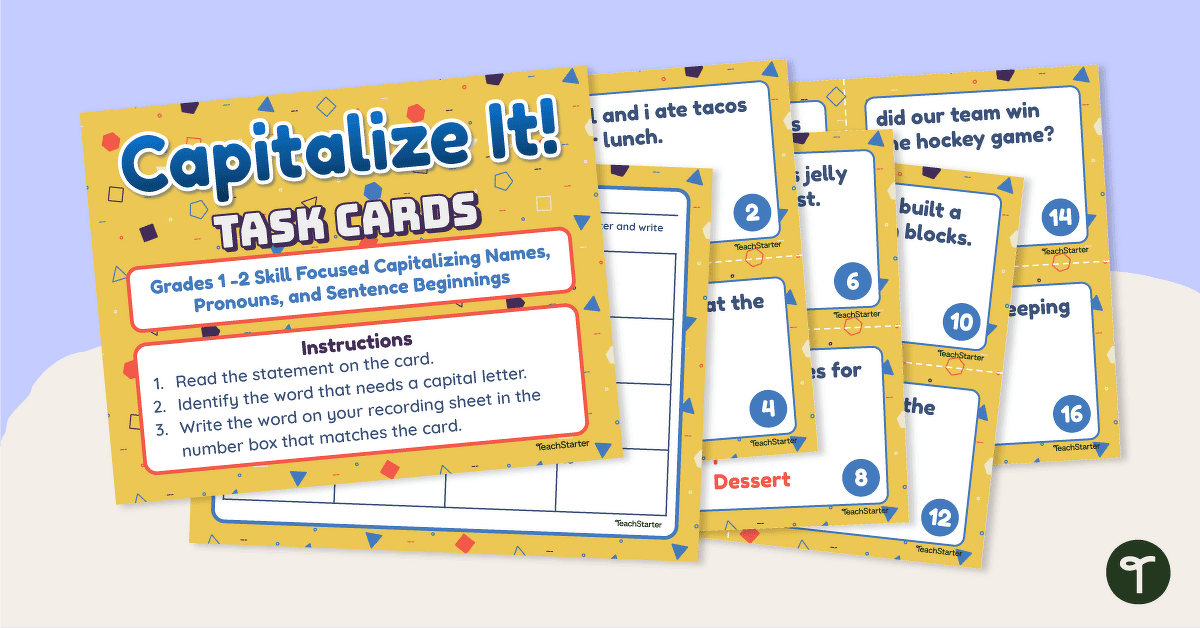
A classic is the board game from The Measured Mom. Print the board with rules listed. Cards show sentences missing capitals. Players draw, read, identify the rule, and move spaces equal to the rule number. For rule 1 (sentence starts), move one; for rule 6 (titles), move six. Materials: board, cards, recording sheet optional. Answer key resolves disputes. Suited for grades 1-3, it promotes discussion. Groups of 2-4 work best. No writing needed, but optional for practice. This fosters critical thinking as players explain choices.
Card games work well too. Create decks with lowercase sentences on one side, corrections on back. Players flip, fix, and check. Add points for speed. Dice rolls determine categories, like “names” or “titles.” Bingo with Capitalization Games examples – mark squares when called. Scavenger hunts find capitals in books or signs. Role-play writing letters with proper formats. These build social skills alongside grammar. Easy to make with paper and markers. Adapt for themes, like holidays. Families enjoy them during trips. Schools use for stations. Overall, offline games offer tactile learning experiences.
How to Make Custom Capitalization Games
Steps for creating personalized activities.
Start with rules you want to focus on. List 5-10, like sentence starts or proper nouns. Gather materials: paper, markers, dice or spinners. For a board game, draw paths with spaces labeled by rules. Make cards with example sentences missing capitals. Players identify and move accordingly. Add twists, like bonus points for explanations. For matching games, pair lowercase and capitalized versions. Use envelopes for storage. Test with a small group to refine. Digital tools like Canva help design printables. Share online for feedback. This customization fits specific needs, like focusing on weak areas.
Incorporate themes for interest, such as animals or sports. Example: Capitalize animal names in zoo stories. Vary difficulty – simple for beginners, complex for others. Include visuals for appeal. Time limits add challenge. Reward systems like stickers motivate. Involve kids in creation for ownership. These homemade games cost little but provide tailored practice. They supplement schoolwork effectively. Experiment with formats, from puzzles to relays. Feedback loops improve designs. Ultimately, crafting games empowers creative teaching methods.
Capitalization Games for Young Kids
Tailored activities for early learners.
For preschoolers, start with alphabet recognition. Use blocks with letters – build words, capitalizing first letters. Songs about capitals engage through rhythm. Picture books point out examples. Simple apps with big buttons suit small hands. Matching games pair upper and lower case. Storytime includes pausing to capitalize names. These build foundations gently. Avoid overload; keep sessions short. Praise efforts to encourage. Parents model in daily notes. Daycares use group circles for sharing.
As kindergartners advance, introduce sentence fixes. Use magnets on fridges for playful edits. Coloring pages with words to capitalize. Puppet shows where characters “speak” rules. Board books with flaps reveal corrections. These tactile methods aid motor development. Themes like favorites make it relatable. Progress to naming games, capitalizing friends’ names. Outdoor chalk writing practices in fun settings. Consistency leads to habits. Teachers track with charts. In brief, age-appropriate games nurture early skills.
Capitalization Games for Older Students
Challenges suited for tweens and teens.
For middle schoolers, quizzes on complex rules like titles or adjectives. Online platforms with leaderboards spur competition. Writing prompts require editing for capitals. Group debates on ambiguous cases. Apps with levels unlock harder content. These build analytical skills. Incorporate into essays for real application. Peer reviews highlight errors. Timed challenges sharpen focus. Resources like Quill.org fit well.
High schoolers tackle advanced scenarios, like legal terms or historical docs. Create newsletters, capitalizing properly. Role-plays as editors. Digital tools for collaborative fixes. These prepare for college or jobs. Discussions on style guides like APA. Projects analyzing texts for patterns. Motivation comes from relevance to careers. Teachers assign for homework. Overall, older games emphasize practical use.
Common Mistakes in Capitalization Games
Spot and fix frequent errors.
One error: Capitalizing common nouns, like “dog” instead of “Dog” unless named. Games quiz to distinguish. Over-capitalizing titles – only major words need it. Seasons often wrongly capitalized. “I” always capitals, but easy to forget in haste. Directions versus regions: “go north” vs “the North.” Games provide examples to clarify. Abbreviations vary – “NASA” yes, but check. These pitfalls trip many.
Another: Quotes within sentences. First word capitals if complete thought. Emphasis words sometimes wrongly capitalized. Games with sentences to correct help. Practice reveals patterns. Feedback reinforces right choices. Awareness grows through play. In time, errors drop. Resources list top mistakes with fixes. This targeted approach speeds improvement.
How Capitalization Games Help Avoid Errors
Ways activities build accuracy.
By repeating rules in context, games ingrain correct usage. Immediate corrections teach without shame. Variety prevents monotony. Tracking scores shows growth. Discussions clarify doubts. These methods surpass passive reading. Engagement leads to retention. Adaptable for focus areas. Fun reduces stress around grammar. Consistent play forms habits. Results appear in writing tasks. Educators see gains in tests. Games prove effective for error reduction.
Resources for More Games
Where to find extra options.
Sites like Teachers Pay Teachers offer printable games. Search for “capitalization rules game.” PowerPoint versions for classes. Lakeshore Learning has grab-and-play sets. Books on grammar activities. Communities on Pinterest share free ideas. Apps stores list educational ones. These expand choices. Check reviews for quality. Many free trials available. This variety keeps interest high.
Conclusion
Wrapping up thoughts on capitalization games.
Capitalization games offer a fresh take on grammar, making rules memorable through play. From online quizzes to homemade boards, options suit everyone. Benefits include better writing, confidence, and enjoyment. Try a few to see the difference. Regular practice pays off in clear communication. Thanks for reading – hope this inspires some game time!