
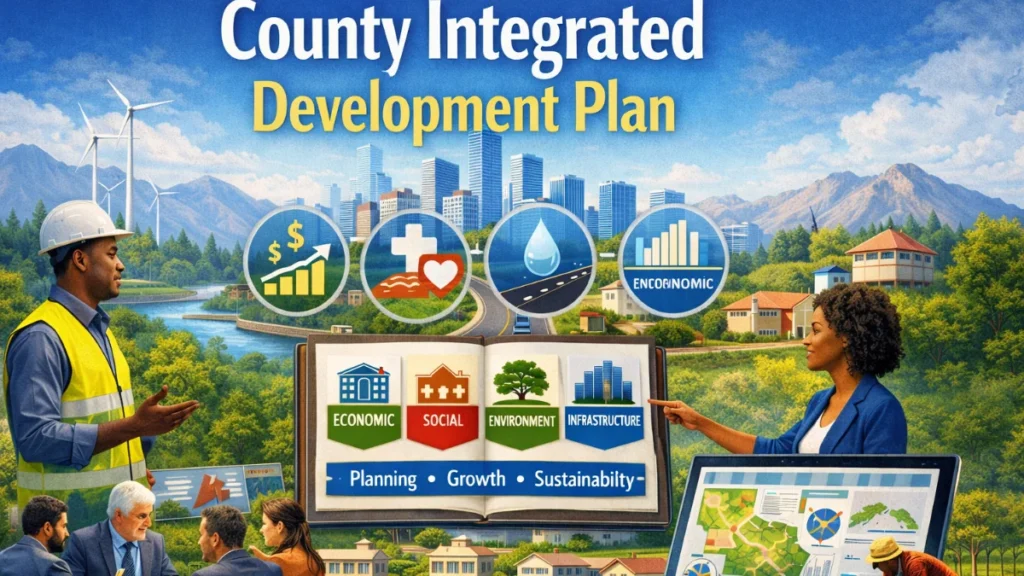
Counties prepare a county integrated development plan to set out clear directions for growth over several years. This document brings together plans for roads, schools, health facilities, farms, and businesses in one place. Leaders collect information about current conditions in the area and decide what needs to come first. The county integrated development plan helps make sure that all projects fit together well instead of working separately. Residents see real improvements when the plan gets followed properly. The process takes several months and involves talks with many groups. In the end, the plan becomes a tool for leaders to manage funds and start work on important issues. People who read the county integrated development plan understand better how local decisions get made. This knowledge opens doors for more involvement in public affairs. Local conditions change over time, so the plan gets reviewed and updated at regular times. The county integrated development plan links short term actions with longer goals for the county.
The county integrated development plan stands out because it looks at all sides of development at once. Economic progress gets balanced with care for the environment and social needs. Officials study data on population, income levels, and existing services. This step shows gaps that the plan must fill. Projects get listed with costs and time frames attached. The county integrated development plan also explains how success will get measured year after year. When everyone follows the same roadmap, waste of resources drops and results improve. Counties prepare the county integrated development plan so that budgets match the listed priorities. This connection keeps spending on track. People from different sectors join to make the document strong. The final version goes through approval steps before use.
Table of Contents
ToggleWhat Does a County Integrated Development Plan Include
Sections inside the county integrated development plan cover a wide range of topics in clear detail. One part describes the current state of the county with facts and figures on different sectors. Another part lays out the big picture goals for the next five years. Strategies show exactly how to reach those goals through specific actions. The plan includes lists of projects with expected results and required money. Ways to check progress appear throughout so leaders can adjust if needed. Monitoring tools help track whether targets get met on schedule. The county integrated development plan ties everything to real life conditions so the ideas stay practical. Residents find it easier to follow when the language stays straightforward and focused on local issues.
The Main Reasons Counties Prepare a County Integrated Development Plan
Counties prepare a county integrated development plan because organized growth leads to better outcomes for everyone involved. Scattered efforts often lead to repeated work or missed chances. A single plan stops that by connecting all parts of county life. Funds get directed toward the most pressing needs instead of random choices. This approach supports steady progress in areas like transport links and clean water access. The county integrated development plan also helps attract support from outside groups because it shows clear thinking. Leaders use the document to report back on what gets achieved each year. Public trust grows when results match the written promises. Over time, the plan shapes stronger communities through consistent effort.
How Counties Build a County Integrated Development Plan
The building process for a county integrated development plan starts with gathering facts about the area. Teams collect numbers on health, education, farming output, and other key topics. They talk to experts and review past records to spot trends. Public meetings come next where residents share views on what matters most. Officials note down suggestions and sort them by importance. Draft versions get written based on all this input. Reviews happen to fix any weak spots before final approval. The county integrated development plan then receives official sign off from the assembly. Implementation begins once the document takes effect. Regular checks keep the work on course through the full period.
Another part of building the county integrated development plan involves linking local ideas with broader targets. Officials make sure the projects line up with available money and skills. Timelines get set so work moves forward without long delays. Training sessions sometimes prepare teams for their roles in carrying out the tasks. The county integrated development plan includes backup options if conditions shift suddenly. This flexible setup keeps the plan useful even when surprises arise. People who join early in the talks often feel more connected to the final results.
Key Sections Inside a County Integrated Development Plan
Key sections inside the county integrated development plan start with a clear picture of the county today. Facts about land, people, and resources fill this opening part. Goals and targets follow to paint the desired future state. Strategies explain the steps needed to close the gaps identified earlier. Project lists detail actual work like building new clinics or fixing roads. Each entry notes costs and who will lead the effort. Monitoring rules show how to measure outcomes at set points. The county integrated development plan ends with ways to report findings to the public. These sections work together to create one complete picture. Readers can jump to any part for quick answers on specific topics.
How Residents Take Part in the County Integrated Development Plan
Residents take part in the county integrated development plan through open meetings held across the area. Officials invite comments on draft ideas and listen carefully to local stories. Written submissions also get accepted so everyone finds a way to contribute. Feedback gets sorted and used to shape the priorities listed in the document. This input makes the county integrated development plan fit real daily life instead of distant assumptions. After approval, people stay involved by attending progress updates and asking questions. The process builds a sense of shared ownership. When residents speak up, leaders gain fresh perspectives on what works best. The county integrated development plan becomes stronger through these ongoing exchanges.
Changes That Come from a Strong County Integrated Development Plan
Changes that come from a strong county integrated development plan show up in everyday services. New roads cut travel times and open markets for farmers. Schools get upgrades so classes run smoothly with enough teachers and books. Health centers receive equipment that improves care for families. Jobs grow in sectors targeted by the plan such as tourism or small manufacturing. The county integrated development plan ensures water projects reach more homes and farms. Environmental steps protect rivers and forests for future use. Communities notice safer streets and cleaner public spaces as work advances. These outcomes build confidence in local leadership. Steady follow through turns the written goals into visible progress over the years.
Problems That Sometimes Appear and Ways to Address Them
Problems sometimes appear with the county integrated development plan when funds fall short of needs. Leaders solve this by focusing first on core projects and seeking extra support from partners. Coordination issues between departments get fixed through regular team meetings and shared reports. Public interest can drop if updates stay rare so counties schedule frequent forums to keep everyone informed. Changes in leadership sometimes slow momentum but the plan document keeps directions steady. The county integrated development plan includes clear rules for adjustments when unexpected events occur. Training for staff helps teams stay skilled at tracking results. These steps reduce risks and keep the overall work moving forward smoothly.
Ways to Learn More and Stay Informed About the County Integrated Development Plan
Ways to learn more about the county integrated development plan include checking official county websites for full copies. Public notice boards and local radio stations often announce meeting dates and summaries. Residents can request printed versions at county offices for closer study. Community groups sometimes hold sessions to explain main points in plain language. The county integrated development plan appears in budget reports each year so people can see links to actual spending. Staying informed means attending at least one update session per year. Notes from these events help track what gets done. This ongoing attention lets individuals spot chances to support or suggest improvements. Knowledge about the plan turns passive observers into active contributors.
For More Information: Visit Here
Conclusion
The county integrated development plan offers counties a clear path toward balanced and lasting growth. It connects data, public input, projects, and checks into one working guide that shapes daily life. People gain practical understanding of how local priorities get chosen and carried out through this process. Knowledge from the document supports smarter questions at meetings and better support for good ideas. Counties see stronger results when the plan stays central to decisions on funds and actions. Readers walk away with tools to follow progress and join efforts that match community needs. This approach builds trust and delivers real gains in services, jobs, and living standards across the area.