
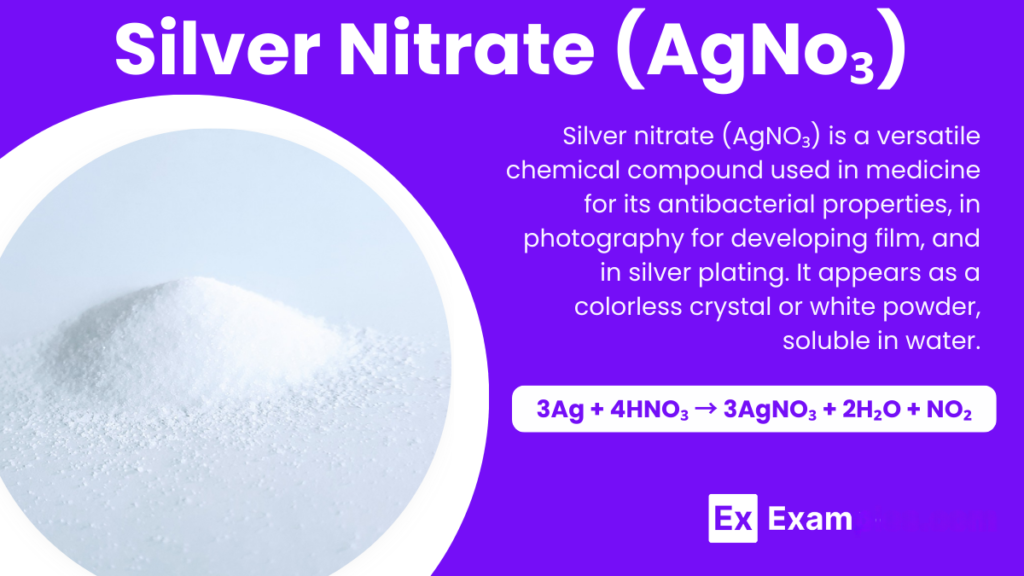
People often hear about silver nitrate in science classes or medical settings, but many wonder what it really means. This compound plays a big role in everyday items and treatments. At its core, silver nitrate stands as a chemical made from silver and nitric acid. It looks like clear crystals and dissolves easily in water. Over time, light turns it dark, which explains its use in old photography. Doctors apply it to stop bleeding or fight germs. Factories rely on it for mirrors and inks. This article breaks down the basics in plain terms. Readers will learn its makeup, creation, and common roles. Real examples show how it fits into life. By the end, the facts become clear and useful for anyone curious.
The story of silver nitrate starts with simple questions. What makes it special? Why do people choose it over other chemicals? Answers lie in its traits. It reacts quickly with many substances, creating new products. In labs, students mix it with copper to grow silver trees. That shows its power in reactions. Beyond experiments, it helps in health and industry. Beginners might think of it as a magic powder, but science explains everything. No need for complex terms here. Just straightforward facts guide the way. Think of it like salt, but with silver instead of sodium. That mental picture helps grasp its nature. Now, let’s look closer at what defines this compound.
Table of Contents
ToggleWhat Is Silver Nitrate?
Silver nitrate counts as an inorganic compound with the formula AgNO3. That means one silver atom bonds with one nitrogen and three oxygen atoms. In pure form, it shows up as white or colorless crystals without any smell. When exposed to light or certain materials, it darkens to black. This happens because silver particles form inside. The change matters a lot in some fields. For instance, old cameras used this trait to capture images. The compound weighs about 170 grams per mole, a measure scientists use for amounts. It feels solid at room temperature but melts around 210 degrees Celsius. Boiling comes at 440 degrees, though it breaks down first. These details help understand its behavior in different situations.
Many confuse silver nitrate with pure silver, but they differ greatly. Pure silver shines as metal, while this acts as a salt. Salts form from acids and bases, and here nitric acid plays the part. The result dissolves well in water, unlike metal silver. Solutions turn clear and can conduct electricity due to ions. Ions are charged particles that move freely. This property aids in tests for other chemicals. For example, adding it to salt water creates a white cloud from silver chloride. That test spots chloride ions quickly. Beginners find such demos fun and educational. They reveal how chemicals interact in real time. Overall, silver nitrate bridges metal and salt worlds in chemistry.
How People Make Silver Nitrate
Creating silver nitrate involves a basic reaction. Workers dissolve silver metal in nitric acid. The acid eats away at the silver, releasing gases and forming the compound. Cold, weak acid makes nitrogen monoxide gas. Hot, strong acid produces nitrogen dioxide instead. After the mix, they evaporate the liquid to get crystals. This method dates back centuries. Early chemists noted it in the 1200s. Today, labs and factories follow the same steps but with safety gear. Pure silver costs money, so they use high-quality bars or scraps. The process needs care to avoid spills or fumes. Fumes irritate lungs, so vents help. Once done, the product gets stored in dark bottles to prevent darkening.
In small scales, students try this in class under supervision. They drop a silver coin in acid and watch bubbles. The coin vanishes, leaving a blue tint from impurities. Real production skips coins for pure metal. Companies sell it in powder or sticks for easy use. Sticks mix it with potassium nitrate for hardness. That form, called lunar caustic, handles better for medical tasks. Making it at home poses risks, so experts advise against it. Instead, buy from trusted sources. Purity matters for safe results. Low purity might add unwanted reactions. This creation story shows chemistry’s practical side. It turns raw materials into useful tools for many jobs.
Properties of Silver Nitrate
silver nitrate shows several key traits. It dissolves in water at different rates by temperature. At freezing, 122 grams fit in 100 milliliters. At boiling, over 900 grams dissolve. That high solubility helps in solutions for tests or treatments. It mixes with ammonia, ether, and glycerol too. But in benzene or ethanol, less so. Crystals form in an orthorhombic shape, a type of geometry. Light breaks it down, forming silver specks. That’s why storage happens in amber glass. Heat capacity sits at 93 joules per mole Kelvin, a measure of energy absorption. Entropy and formation energy give clues to stability. These numbers aid engineers in designs.
When heated, silver nitrate acts differently from most nitrates. Others turn to oxides, but this yields pure silver, oxygen, and nitrogen dioxide. Decomposition starts slowly at 250 degrees and speeds up. This trait helps recover silver from waste. In water, it forms Ag+ and NO3- ions. Ag+ binds strongly to halides like chloride. That creates precipitates, solids from liquids. Colors vary: white for chloride, yellow for iodide. Tests use this for identification. Acidity comes mild, but it corrodes skin. Magnetic properties show diamagnetism, repelling fields weakly. Refractive index at 1.744 bends light in crystals. All these build a full picture for users.
Reactions Involving Silver Nitrate
Silver nitrate reacts in many ways. With copper, it swaps places: copper dissolves, silver grows as crystals. The solution turns blue from copper nitrate. This demo, called a silver tree, teaches displacement. Halides form solids: chloride white, bromide cream, iodide yellow. Acid helps avoid false positives. In organics, it aids separations by binding alkenes. Ammonia releases them later. With base, it makes silver oxide, brown solid. That’s a step to other compounds. Heat breaks it to silver, useful for recycling. Explosives like silver fulminate come from reactions with acetylene or azide. Care prevents accidents there.
In biology, silver nitrate stains proteins and fibers black. That highlights structures under microscopes. For flowers, it blocks ethylene, keeping blooms fresh longer. Ink from it marks skin permanently until layers shed. Voters get fingers stained to stop fraud. In glass, it creates yellow hues when fired. These reactions show versatility. Beginners see it as a tool for change. Mix it right, and new things appear. Wrong mixes risk burns or blasts. Always follow guides. Real examples include lab tests for water purity. Boiler checks use it to spot salt leaks. Such practical ties make learning stick.
Uses in Medicine
Doctors turn to silver nitrate for germ control. It kills bacteria by binding proteins. In past times, eye drops prevented blindness in newborns from infections. A 2% solution went in eyes at birth. Now antibiotics replace it, but it worked well then. For wounds, it cauterizes, sealing tissue to stop bleeds. Sticks apply directly to nosebleeds or ulcers. Podiatrists kill nail cells with it for ingrown toes. Warts clear up after repeated dabs in studies. About 43% vanish fully, 26% improve. Burns once got soaked dressings in 0.5% solution. That fought infections but needed electrolyte checks.
In modern care, silver nitrate treats skin issues. Granulation tissue, overgrowth in wounds, shrinks from it. Stomas get shaped with applications. Oral sores heal faster. It’s cheap and easy to store. But overuse risks argyria, gray skin from silver buildup. That happens rarely with proper doses. For water, tiny amounts disinfect against E. coli. 10 to 200 micrograms per liter suffice. In gels or ointments, it prevents wound infections. Fungi and bacteria stop growing. Patients see quicker healing. Examples include burn units using it before creams took over. Its role shrinks but stays for specific needs. Beginners appreciate its simple action against germs.
Uses in Photography
Old photography relied on silver nitrate. It sensitized paper or film to light. Mixed with halides, it formed light-sensitive grains. Exposure created images by reducing silver ions. Developers brought out pictures. This wet process defined early cameras. Daguerreotypes used it on copper plates. Later, gelatin emulsions improved it. Today, digital replaces film, but some artists stick to traditional methods. They coat paper with solutions for unique prints. The darkening trait captures shadows perfectly. Museums preserve such works.
In labs, silver nitrate stains gels for protein views. After separation, it highlights bands. Scanning electron microscopes use it too. For mirrors, it deposits silver on glass. The Tollen’s test mixes it with ammonia for shiny layers. That’s how bathroom mirrors get made. In explosives, it precursors fulminate for detonators. But safety limits that now. These photo ties show its light-sensitive side. Beginners experiment with sun prints: coat paper, place objects, expose to sun. Dark areas form around shapes. Fun way to see chemistry at work. Its legacy lives in images from the past.
Other Industrial Uses
Factories use silver nitrate as a starting point for silver items. It turns into halides for film or oxide for batteries. Cheap and stable, it stores well. In organics, it oxidizes or deprotects groups. Alkenes separate via absorption. Acetonitrile dissolves it for reactions. Inks mark voters’ fingers against fraud. The stain lasts weeks. Glass artists fire it for yellow colors. From pale lemon to deep gold, it adds mosaic effects. Since 1300s, stained windows feature it.
For water tests, silver nitrate spots chlorides. In boilers, it detects sea water leaks. Cargo checks find moisture sources. Flowers last longer with stem dips. Ethylene blocking delays wilt. In histology, it stains fibers and nucleic acids. Reticular networks show up black. These uses span fields. Examples include election booths using ink for fair votes. Or florists treating cuts for fresher bouquets. Its role in synthesis helps make drugs or materials. Beginners see it as a helper chemical. Versatile and reliable, it solves many problems in industry.
Safety Concerns with Silver Nitrate
Silver nitrate demands careful handling. It corrodes skin and eyes, causing burns. Wear gloves and goggles always. If touched, rinse with water fast. Ingestion poisons, with LD50 around 800 mg per kg in animals. That means lethal dose for half tested. In eyes, it damages permanently if not flushed. Storage keeps it from light and moisture. Mixed with ethanol, it risks explosion. As oxidizer, it boosts fires. Environmentally, it harms aquatic life. Dispose properly, not down drains.
Long-term, silver buildup causes argyria, blue-gray skin. That needs over 1 gram total. Topical use rarely leads there, but ingestion does. No cancer links proven, but caution advised. In medicine, monitor sodium and chloride levels with large areas. Hypotonic solutions dilute blood. Babies got limited exposure. Labels warn of dangers. GHS symbols show corrosion and oxidation. Precautions include eye wash stations. Real cases include chemical burns from spills. Quick action limits harm. For beginners, start small and supervised. Respect its power for safe use.
Environmental Impact of Silver Nitrate
Silver nitrate affects nature if released. As silver ions, it toxifies fish and plants. Low levels kill bacteria in water, but high harm ecosystems. Regulations limit it in waste. Recycling recovers silver to cut mining. Mines pollute with runoff, so less demand helps. In use, like inks or meds, little escapes if handled right. But factories must filter effluents. Studies show silver accumulates in sediments.
Alternatives reduce impact. Digital photos skip chemicals. Greener antiseptics replace it. But for some jobs, it stays best. Balance benefits with care. Examples include water treatment plants testing for safety. Or elections weighing ink use against fraud. Its ions bind soil, limiting spread. But bioaccumulation in food chains poses risks. Awareness leads to better choices. Beginners learn eco-friendly habits early. Simple steps like proper disposal make a difference.
Conclusion
Silver nitrate offers a window into chemistry’s wonders. From crystals to reactions, it touches medicine, photos, and industry. Key points include its formula AgNO3, water solubility, and light sensitivity. Made from silver and acid, it serves as antiseptic or stain. Safety calls for gloves and quick rinses. Environment needs protection from releases. Real uses like wart treatment or voter ink show practicality. This knowledge equips readers to understand labels or experiments. It solves curiosity about common chemicals. Value lies in safer handling and informed choices. Whether student or hobbyist, grasp its basics for better insight. Chemistry becomes less mystery, more tool.
FAQs
What happens if silver nitrate touches skin?
It stains black and may burn. Wash with water and soap right away. Seek medical help for bad reactions.
Can silver nitrate go in eyes?
No, it causes damage. Old use in newborns prevented infections, but now avoided. Flush eyes if contact occurs.
Why does silver nitrate turn black?
Light or organics reduce it to silver metal, which looks dark.
Is silver nitrate toxic?
Yes, ingestion harms. Handle with care, keep from children.
Where to buy silver nitrate?
Labs, chemical suppliers, or online stores sell it. Check purity and laws.<|control12|>Word count check: Let’s approximate.